


Laser Cladding Wire Feeding Repair Technology Advantages and Future Development Trends
Contact Info
- Add:西安市国家民用航天产业基地航天基地299号西安建工科技创业基地十号楼4层, Zip:
- Contact: 段纯
- Tel:17392761868
- Email:gsjgkj@163.com
Other Products


Laser cladding technology, as a cutting-edge surface modification and repair method in modern manufacturing, is gradually demonstrating its unique advantages and potential in fields such as aerospace, automotive manufacturing, energy and power, and heavy machinery. Among these, laser cladding wire feeding repair technology, with its high efficiency, precision, low dilution rate, and excellent metallurgical bonding properties, has become an effective solution for addressing surface damage and wear issues in complex components.
I. Overview of Laser Cladding Wire Feeding Repair Technology
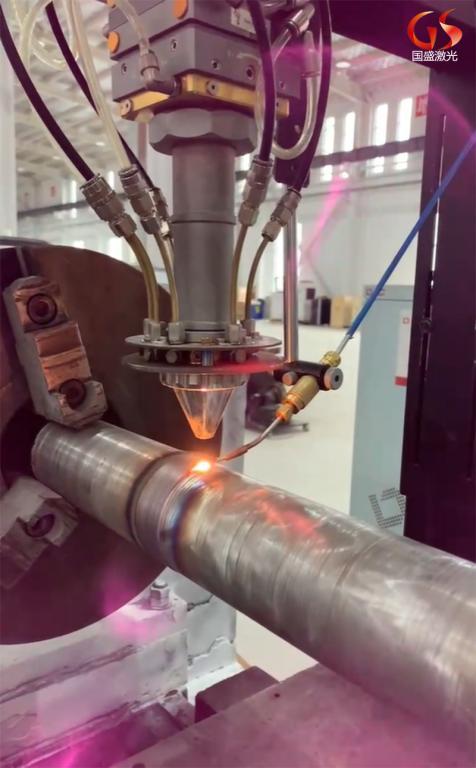
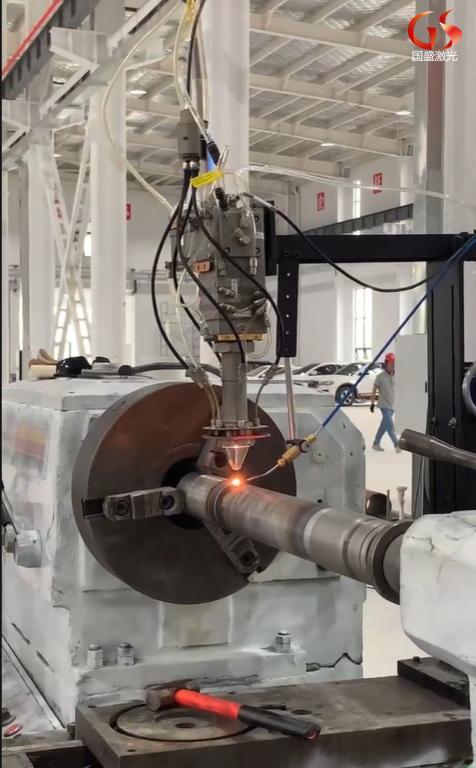
Laser cladding, in simple terms, involves using a high-energy-density laser beam as a heat source to melt specific powder or wire materials and coat them onto the substrate surface, forming a dense coating metallurgically bonded to the base material through rapid solidification. Wire feeding technology, on the other hand, involves continuously and stably feeding the cladding material in wire form into the laser beam action area. By precisely controlling the wire feeding speed and laser scanning path, it enables accurate repair and reinforcement of complex-shaped surfaces.
II. Technical Features and Advantages
1. High Efficiency: The laser cladding process has a small heat-affected zone, fast heating speed, and rapid cooling, effectively shortening the repair cycle and improving production efficiency.
2. High Precision: By controlling the laser beam's scanning path and wire feeding speed through computer programming, high-precision repair of complex shapes and small dimensions can be achieved.
3. Low Dilution Rate: The high energy density in the laser cladding process results in a small mixing zone (dilution zone) between the cladding layer and the substrate, preserving the primary properties of the cladding material.
4. Excellent Metallurgical Bonding: The coating formed by laser cladding establishes a strong metallurgical bond with the substrate, enhancing the overall strength and wear resistance of the repaired part.
5. Wide Material Selection: Alloy powders or wires of different compositions can be selected based on requirements to achieve customized adjustments of surface properties.
III. Application Examples
1. Repair of Aircraft Engine Blades
Aircraft engine blades operate for extended periods in harsh environments characterized by high temperature, high pressure, and high speed, making them highly susceptible to wear, cracks, and other damage. Using laser cladding wire feeding technology, localized repairs can be performed without removing the blades, restoring their aerodynamic shape and mechanical properties, extending their service life, and reducing maintenance costs.
2. Remanufacturing of Mining Machinery Components
Mining machinery equipment, such as excavator bucket teeth and crusher hammers, frequently suffers damage due to long-term impact and wear. Laser cladding wire feeding technology can quickly form high-hardness, high-wear-resistant coatings on these components, improving their wear resistance, enabling remanufacturing, and extending their service life.
3. Surface Strengthening of Molds
Molds often experience reduced precision and shortened service life due to wear, thermal fatigue, and other factors during use. Laser cladding wire feeding technology can form an alloy coating with excellent wear and heat resistance on the mold surface, effectively improving the working conditions of the mold and enhancing its service life and processing accuracy.
IV. Future Development Trends
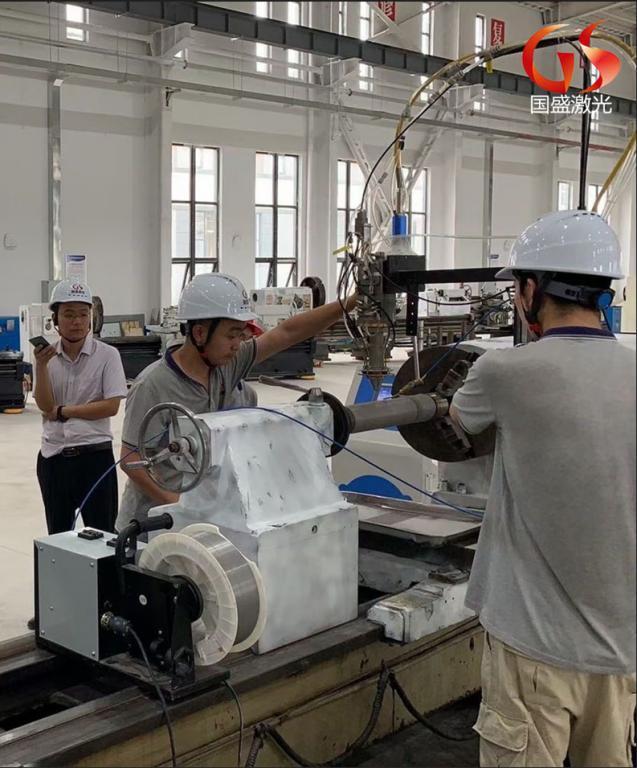
With the deepening of smart manufacturing and green manufacturing concepts, laser cladding wire feeding repair technology will usher in broader development prospects. In the future, the technology is expected to achieve breakthroughs in the following areas:
1. Intelligent Control: Integrating advanced technologies such as machine vision and artificial intelligence to achieve intelligent monitoring and adaptive adjustment of the repair process, improving repair precision and efficiency.
2. Development of New Materials: Exploring more high-performance, low-cost, and environmentally friendly cladding materials to meet specific needs in different fields.
3. Process Optimization: By深入研究 the interaction mechanism between lasers and materials, optimizing process parameters to further improve coating quality and reduce energy consumption and costs.
4. Expansion into Multiple Fields: Promoting the application of laser cladding wire feeding repair technology in more industrial fields, such as marine engineering and nuclear power generation, to support the transformation and upgrading of the manufacturing industry.
In summary, laser cladding wire feeding repair technology, with its unique advantages and broad application prospects, is gradually becoming an indispensable surface modification and repair method in modern manufacturing. With continuous technological advancements and innovations, it is believed that it will play an even more important role in the future, driving the manufacturing industry toward higher quality, greater efficiency, and more environmentally friendly development.
| Industry Category | Electrical Equipment & Supplies/Power Distribution & Transmission/Power Distribution Boxes |
|---|---|
| Product Category | |
| Brand: | 国盛激光 |
| Spec: | |
| Manufacturer: | 西安国盛激光 |
| Origin: | 116101 |


